
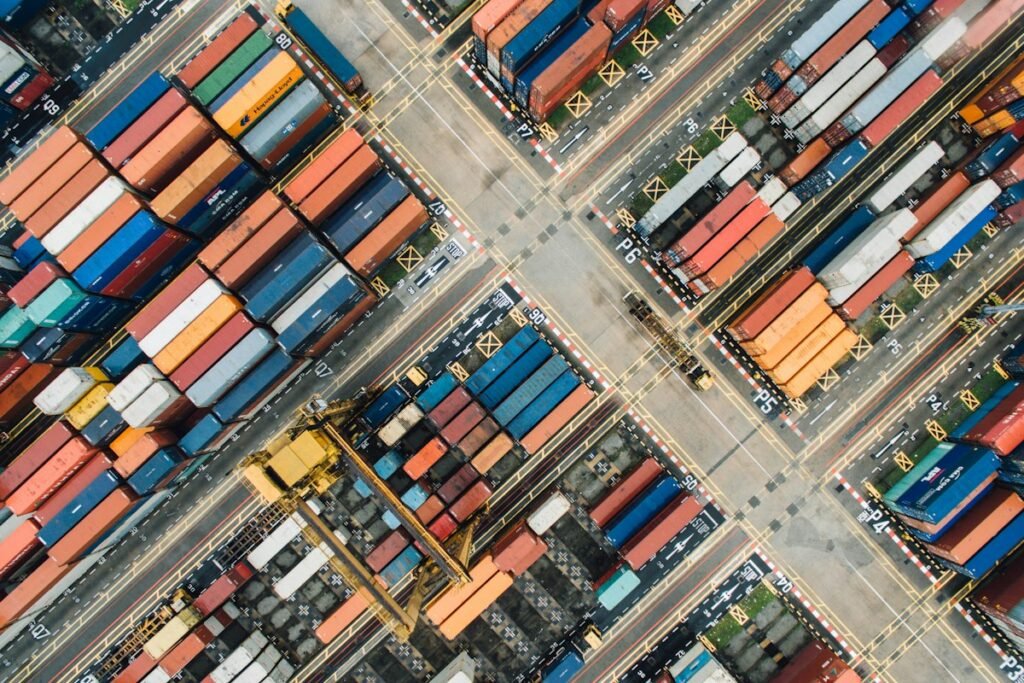
Shipping bulk cargo between Turkey and Italy involves more than booking a truck or vessel. A freight forwarder coordinates transport legs, handling, documents, customs procedures and delivery milestones, while the shipper and buyer remain responsible for accurate cargo information. This guide explains route choices, customs-union limits, paperwork, Incoterms, insurance and how to compare quotations.
What a freight forwarder does
A freight forwarder organises the movement of goods between the shipper and the consignee. For a Turkey–Italy bulk cargo shipment, the forwarder may arrange collection, road or port transport, ferry or vessel capacity, customs brokerage, transit procedures and final delivery. It may also coordinate weighing, loading, unloading, storage and cargo inspections. The forwarder is not automatically the carrier, customs authority or cargo insurer. Its legal and commercial role depends on the service agreement and transport documents. Before appointing one, ask which services it performs directly, which are subcontracted and who is responsible at every handover.
Define the cargo before asking for a quotation
The phrase bulk cargo can mean loose commodities such as grain, minerals or fertiliser, but some businesses use it loosely for large-volume packaged goods or full-truckload shipments. These are different transport requirements. Dry bulk may need a suitable vessel hold, specialised loading equipment and contamination controls. Liquid bulk may require tanks, compatibility checks and cleaning certificates. Palletised products may move in trailers or containers. Give the forwarder a complete product description, packaging type, gross weight, volume, dimensions, density, handling needs and whether the goods are hazardous, temperature-sensitive or subject to special controls.
Road freight between Turkey and Italy
Road transport can suit packaged goods, palletised freight, full-truckload shipments and cargo that needs door-to-door service. A truck may use road corridors through neighbouring countries and a ferry or other sea crossing, depending on the carrier’s route and schedule. Road freight can offer flexibility, but actual transit time depends on border queues, ferry capacity, driver-hours rules, road restrictions, seasonal demand and customs procedures. Ask for a route plan with realistic buffers and identify whether the service is accompanied, unaccompanied, direct or combined with another mode.
Sea freight and port planning
For large volumes or less time-sensitive cargo, sea transport can offer economies of scale. Depending on the commodity and physical dimensions, a forwarder may compare full-container load, less-than-container load, breakbulk or bulk-vessel options. Port handling, vessel schedules, terminal cut-offs, loading equipment and inland collection all affect the overall service. A low ocean-freight rate may be offset by origin handling, storage, demurrage, detention or destination haulage. Ask for origin and destination ports, service frequency, transhipment points, estimated port-to-port time and the complete inland delivery plan.
Understand the EU–Türkiye customs union
The EU–Türkiye customs union has a defined product scope. The European Commission’s customs-union guidance states that the arrangement covers industrial products and processed agricultural products, while certain agricultural products and coal and steel products follow separate arrangements. It is therefore unsafe to assume every shipment from Turkey enters Italy duty-free just because a customs union exists. Product classification, customs status, processing, applicable measures and supporting evidence all matter. Ask a customs specialist to assess the exact commodity code before building a landed-cost estimate.
A.TR and customs-status evidence
For qualifying goods covered by the customs union, an A.TR movement certificate can evidence that the goods are in free circulation within the customs-union territory. It is not the same as a certificate of preferential origin and does not, by itself, prove that a product was manufactured in Turkey. The correct paperwork depends on the commodity, its customs status and the route. Ask the broker whether an A.TR is relevant, what form is accepted and whether any other origin, sanitary, phytosanitary or product-compliance documents are required. Never assume a certificate from an earlier shipment automatically applies to a different product.
Commodity classification and customs declarations
A commodity code is central to duty calculations, customs controls and statistical reporting. The exporter and importer should agree a precise commercial description and provide enough technical detail for classification. Typical documents can include a commercial invoice, packing list, transport document, export declaration, import declaration and certificates required for the goods. The forwarder can coordinate documents, but the trader remains responsible for giving accurate information. Do not copy a code from an unrelated shipment simply because the product name sounds similar. An incorrect classification can lead to delays, reassessment, penalties or rejected declarations.
Incoterms and who pays for each stage
Incoterms clarify selected responsibilities between seller and buyer, including delivery points, transport costs, risk transfer and certain export or import obligations. They do not replace the sale contract, cargo insurance or customs law. Write the chosen term with a precise named place or port and identify the Incoterms edition. Vague wording such as “delivery included” can cause disagreements about unloading, terminal charges and import clearance. The International Chamber of Commerce Incoterms resources explain the framework; a trade professional can help choose a rule that matches the actual route and contract.
Weight, dimensions and loading plans
Accurate cargo data is essential for safe and cost-effective transport. Provide gross weight, package count, length, width, height, stackability and centre-of-gravity details for unusual loads. Road vehicles must comply with axle and gross-weight limits, while containers have payload and packing restrictions. Loose bulk requires suitable loading and discharge equipment. Incomplete or inaccurate information can result in rejected bookings, reweighing, rehandling or additional charges. For irregular cargo, supply photographs and ask for a written loading and securing plan. Do not treat an estimated weight as final when legal capacity depends on it.
Cargo packaging and contamination control
Packaging should match the commodity, transport mode, weather exposure and expected handling. Bulk commodities may need moisture controls, clean holds or trailers and inspection records. Bagged products need suitable palletisation and wrapping. Cargo that can absorb odours, moisture or chemical residue should be protected from incompatible loads. Agree who checks the condition of the loading space before loading and how any contamination is recorded. Photographs, seal numbers, weighbridge tickets and signed loading reports can help resolve later disputes about shortage, damage or cargo condition.
Insurance and liability
Carrier liability under a transport convention or contract may be limited and may not equal the commercial value of the goods. A forwarder’s liability is also different from a cargo insurance policy. Review the insured value, covered events, exclusions, deductible, geographical scope, claims deadline and evidence required after loss or damage. Make sure the policy covers every leg, including terminal storage and inland haulage where appropriate. For bulk materials, agree sampling and weighing procedures, moisture tolerances and the method for recording a shortage. Keep copies of the policy, invoice, packing list and transport documents.
Dangerous or regulated cargo
Tell the forwarder before quoting if the cargo is hazardous, controlled, perishable or subject to specialised handling. Dangerous-goods rules may affect classification, packaging, labels, declarations, vehicle or vessel acceptance and emergency information. Batteries, chemicals, flammable substances and some fertilisers can trigger special requirements. Food and agricultural products may require sanitary or phytosanitary documentation and official inspections. Do not omit product characteristics to obtain a lower headline rate. Misdeclaration can cause shipment rejection, penalties, delays and safety risks. Ask for written confirmation that the forwarder and carrier can handle the goods.
What a freight quotation should include
Ask the forwarder to separate the line-haul charge from origin handling, export clearance, ferry or port charges, terminal handling, documentation, customs brokerage, import handling, inland delivery, fuel surcharges and optional services. Bulk cargo may incur loading and discharge equipment fees, storage, weighing, cleaning or waiting-time charges. Confirm whether duties and taxes are included, whether rates are fixed or subject to adjustment and how long the quote remains valid. Compare quotations using the same cargo data and Incoterm. A lower headline rate may simply exclude costs included by another provider.
Tracking, delays and claims procedure
Ask the forwarder to provide milestones for collection, export clearance, departure, arrival, customs release and delivery. Reaching the destination port does not mean cargo is ready for collection; discharge, checks and inland transport may remain. Agree how frequently updates will be sent and whom to contact if the shipment misses a ferry, faces a customs hold or arrives damaged. Confirm the claim notification deadline before dispatch. For production-critical goods, consider a contingency route or buffer stock. A realistic schedule with prompt exception reporting is more useful than an overly confident transit promise.
Selecting a reliable Turkey–Italy forwarder
Compare route experience, commodity knowledge, customs capability, insurance arrangements, carrier network, financial stability, communication and document accuracy. Ask for references for similar shipments rather than generic testimonials. Confirm whether the forwarder has operational partners in both countries and can communicate with the shipper, consignee and authorities. Read the terms for subcontracting, liability limits, payment dates, cancellation charges and claims. A reliable provider will ask detailed questions before pricing. Treat an offer cautiously if the company promises a fixed price without knowing the commodity, dimensions, weight, Incoterm or customs status.
Pre-shipment checklist
Before cargo is loaded, confirm the commodity code, commercial description, customs status, route, transport mode, packaging, dimensions, gross weight, collection date, delivery address, Incoterm and insurance. Prepare invoices, packing lists, declarations and any certificates required for the goods. Check that the vehicle, container or vessel is suitable and that the receiver can unload at the planned time. For more commercial explainers, explore our [Business articles] or return to [our guide library]. A successful Turkey–Italy shipment starts with accurate data and a forwarder whose responsibilities are clear in writing.
Frequently asked questions
Does the EU–Türkiye customs union cover every product?
No. Its main customs-union coverage applies to industrial goods and processed agricultural products; other categories follow separate arrangements.
Does an A.TR certificate prove a product was made in Turkey?
No. It is evidence of customs status for qualifying goods, not a general certificate of origin.
What should a forwarder know before quoting?
Commodity, packaging, weight, dimensions, origin and destination, route, Incoterm, handling needs and required customs documents.
Conclusion
Before cargo is loaded, confirm the commodity code, commercial description, customs status, route, transport mode, packaging, dimensions, gross weight, collection date, delivery address, Incoterm and insurance. Prepare invoices, packing lists, declarations and any certificates required for the goods. Check that the vehicle, container or vessel is suitable and that the receiver can unload at the planned time. For more commercial explainers, explore our [Business articles] or return to [our guide library]. A successful Turkey–Italy shipment starts with accurate data and a forwarder whose responsibilities are clear in writing.
For related reading, explore our Business articles or return to our guide library.

Tasha Harshman is a versatile writer who explores a range of topics with a special focus on entertainment. She enjoys sharing clear, engaging insights about movies, celebrities, trends, and pop culture.